
KITCHEN TOP: Which material to choose?
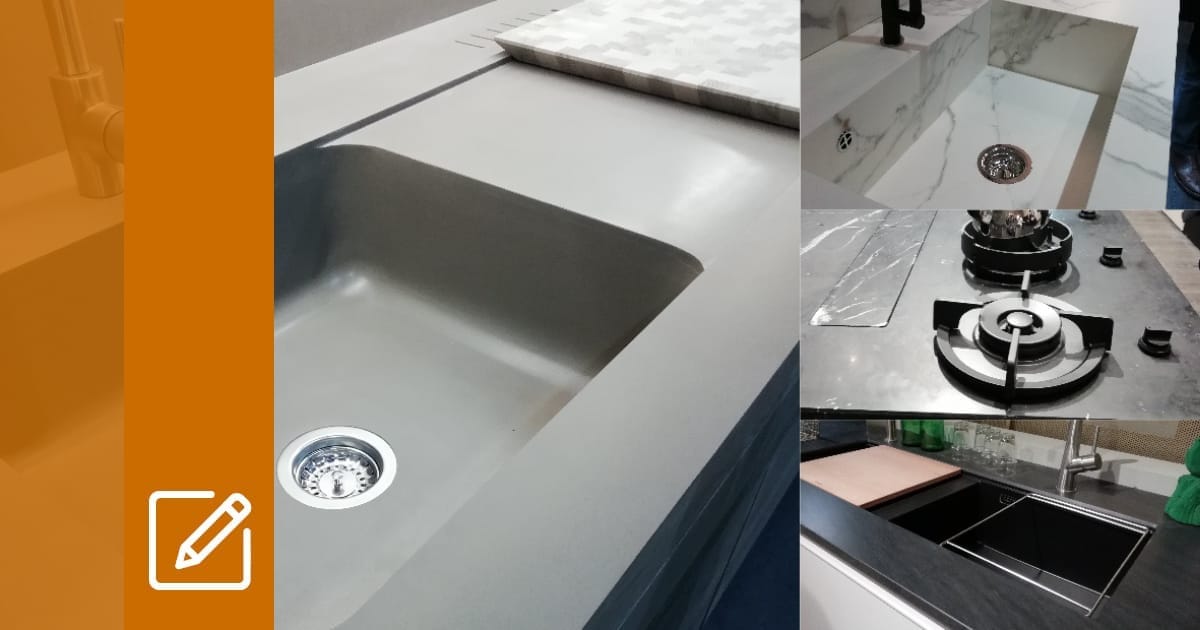
The kitchen is the room where we spend most of our time and therefore it is exposed – more than other places – to inevitable wear. It is always difficult to choose a kitchen model, but above all decide the material of the top. The worktop must be chosen carefully. There are many materials available on the market, from the classic to the most technological ones, each with different properties and characteristics. Certainly, a kitchen worktop must be long-lasting, hygienic and – of course – beautiful. It must also be easy to clean and not require maintenance. Let’s see point by point.
- Durability: a kitchen top must be waterproof, in order to avoid water infiltration, and able to withstand impact, abrasion and heat.
- Hygiene: a hard and compact surface will be free of spots where dirt and bacteria can accumulate.
- Beauty: the kitchen top must “match” with the rest of the furniture. Classic or modern kitchen? Natural stones, synthetic materials, tiles, etc.?
Let’s take a look at the main alternatives on the market.
Marble or granite worktops.
Both have incomparable aesthetic characteristics: a granite kitchen top is more resistant and lasts longer, while a marble kitchen top is more prestigious but very porous. Marble kitchen tops are resistant to abrasion and impact, but vulnerable to acids and stains in general. This material is aesthetically satisfying; a demanding choice but able to add value to the kitchen like nothing else. Granite is highly resistant to scratches and temperature changes, not very porous and very compact. Choosing a granite top means choosing “resistance”.
Dekton worktops.
Dekton is an ultra-compact surface consisting of a mixture of raw materials that react at high temperatures to obtain a top with unparalleled technical and aesthetic characteristics. Thanks to the absence of porosity, Dekton surfaces are highly resistant to both stains and chemical agents, which makes them ideal as a kitchen tops and work surfaces. Dekton worktops are unalterable over time. Free of porosity, they resist high temperatures, abrasions and cuts. The only recommendations of the Manufacturer are: do not expose to contact with hydrofluoric acid (HF), do not re-polish, do not use metal scouring pads.
Laminam worktops.
Laminam is a porcelain stoneware slab produced by wet grinding natural clayey raw materials, granite and metamorphic rocks, compacted by special forming, with hybrid cooking. The ceramic material has exceptional characteristics of hygiene, resistance to heat, atmospheric agents, stains and scratches and its surface is free of porosity, hygienic and resistant to fungi and moulds. Surface maintenance and cleaning are quick and easy. However, we advise you to avoid using ceramic knives directly on the top as they can damage the finish, as well as contact with adhesives and silicones because, once hardened, the removal of residues is not always possible. The gloss version, more delicate, is more exposed to scratches, stains and some types of detergent than other Laminam surfaces.
Okite worktops.
Okite is a product composed of a high percentage of quartz and, to a lesser extent, natural pigments and resins. This type of compound guarantees excellent performance and resistance to abrasion, protection against chemical agents, absorption of liquids and heat. Free of porosity, it is easy to clean and requires no special maintenance. Okite surfaces are highly hygienic and antistatic, also ensuring good colour stability. It is a valid alternative to natural stones. However, Okite tops are sensitive to substances such as bleach, alkaline products, paint solvents, hydrofluoric acid, dichloromethane and caustic soda.
Quartz worktops (Silestone – Stone italiana – Masutti Lines)
Quartz tops are made of slabs formed by a mixture of quartz and resins that offer considerable advantages, in addition to outstanding user-friendliness. This composition guarantees excellent performance against the attack of chemical agents, the absorption of liquids and heat. Quartz tops are also resistant to abrasion, scratches and dents; moreover, thanks to the low absorption of humidity, they are resistant to stains caused by wine, fruit juices, liquids, food colouring, tea and spices with strong colours, without the need for sealants.
Leave a Reply